
For B2B procurement managers, medical device distributors, and healthcare facility operators, sourcing joint care products is a high-stakes responsibility. When buying for the geriatric or post-operative rehabilitation markets, standard “off-the-shelf” fitness sleeves simply do not cut it.
Elderly joints require a highly specialized balance of physiological stabilization, ease of donning (putting the brace on), and skin protection. To ensure your inventory meets clinical demands and minimizes product returns, you must understand the internal anatomy and structural engineering of an orthopedic brace.
Below is the definitive manufacturing and anatomical checklist that global buyers should use when auditing orthopedic joint supports for senior care.
1. The Patella Track: Tracking vs. Compression in Knee Supports
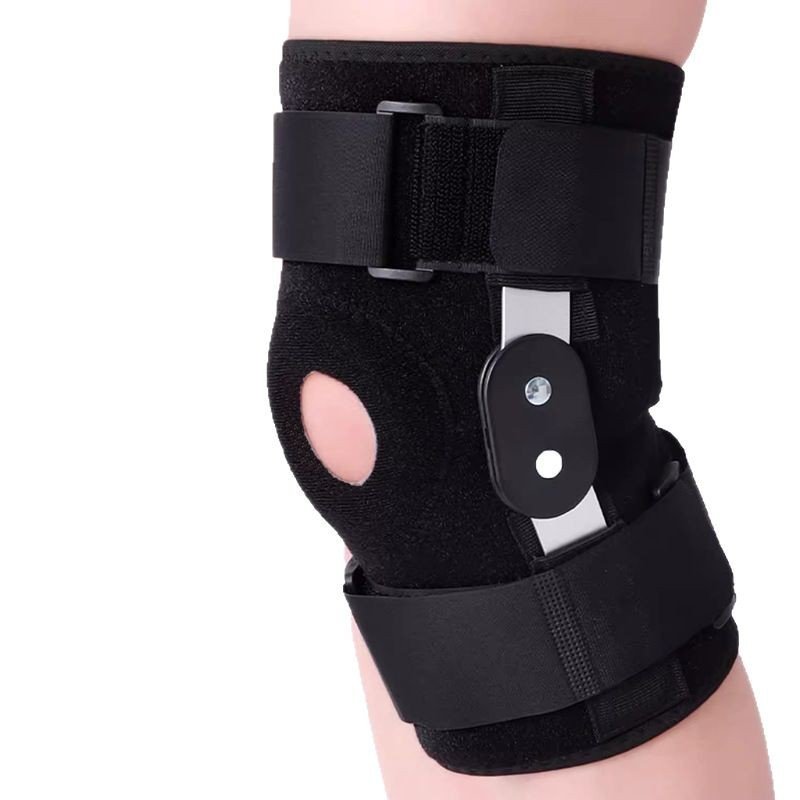
In senior care, knee braces are primarily used to combat osteoarthritis, degenerative joint disease, and instability during mobility transfers. A common manufacturing flaw in cheap braces is uniform compression that flattens the kneecap against the femur, causing pain and cartilage wear.
The Anatomical Requirement:
- Molded Silicone Gel Inserts: Professional knee braces must feature an anatomically shaped, ring-like silicone or EVA insert surrounding the patella. This stabilizes the kneecap, absorbs vertical shock during walking, and redistributes pressure away from the joint center to the surrounding soft tissue.
- Open vs. Closed Patella: For seniors with severe swelling or patellar tracking issues, an open-patella design with reinforced padding reduces direct pressure on the joint while maintaining lateral tracking stability.
2. Lateral Stabilization: Dynamic Support vs. Rigid Restriction
Unlike young athletes who may need absolute joint immobilization via rigid metal hinges, elderly patients usually require assisted mobility. The brace must guide the joint through its natural range of motion while preventing harmful lateral shifting (varus/valgus stress).
The Anatomical Requirement:
- Spiral Steel Stays: Look for supports that integrate dual flexible spiral steel stays on both sides of the joint. These stays flex dynamically with the patient’s movement, providing a “rebound” effect that assists weak muscles during extension without locking the joint.
- Ergonomic Contouring: The internal stabilizers must be anatomically pre-curved to mimic the natural resting angle of human limbs (such as a slight 15-degree flexion for knees), reducing fabric bunching and skin pinching at the joints.
3. Ergonomics of Ergonomic Fastening: Designing for Arthritic Hands
An orthopedic support is useless if the patient cannot put it on independently. Many seniors suffer from osteoarthritis in their fingers, severely limiting their grip strength and fine motor skills.
The Anatomical Requirement:
- Contoured Pull Tabs & D-Rings: Premium braces implement a D-ring pulling mechanism or oversized, textured rubber tabs at the end of straps. This allows patients to slide a finger through or use a whole-hand grip to tighten the brace effortlessly.
- Wrap-Around vs. Pull-On Sleeves: For geriatric care, a full wrap-around design (open-structure) is vastly superior to a pull-on sleeve. Pulling a tight elastic sleeve over a swollen ankle or arthritic knee can be agonizing and dangerous for thin skin.
Comdjoo: Precision-Engineered Orthopedic Braces for Senior Rehabilitation
At Comdjoo, we bridge the gap between medical anatomy and advanced textile manufacturing. Every item in our dedicated Comdjoo Supports & Braces Portfolio is engineered specifically to meet the strict physical and structural requirements of global senior care and home healthcare.
Our manufacturing facility specializes in custom OEM/ODM solutions for orthopedic distributors worldwide, offering:
- Anatomical Integration: Built-in medical silicone pads, targeted spiral stabilizers, and calibrated compression matrices.
- Skin-Safe Materials: Hypoallergenic, latex-free fabrics engineered to prevent friction injuries on fragile senior skin.
- Flexible Customization: Private labeling, custom sizing charts for Western/European demographics, and custom pull-tab configurations for arthritic users.
Upgrade Your Healthcare Inventory Today
Partner with a specialized manufacturer who understands clinical ergonomics. Contact our B2B sales team to request compliance certificates, factory data sheets, or a physical sample kit.
📨 [Contact Comdjoo Sourcing Specialists]
Frequently Asked Questions (FAQ) for Global Orthopedic Buyers
Q1: What makes a knee brace or wrist support “geriatric-friendly” in terms of material choice?
Answer: Geriatric-friendly supports replace rigid, abrasive materials with premium OK cloth, Airprene, and high-elasticity 3D knit fabrics. The interior lining must be smooth, seamless, and moisture-wicking to prevent skin shear and sweating, while the closure systems must utilize low-profile, easy-peel fasteners that require minimal hand strength to open.
Q2: Why are flexible spiral stays preferred over rigid hinges for standard elder care mobility aids?
Answer: Rigid metal hinges are generally reserved for severe ligament tears or post-op immobilization. For daily elder care and age-related joint degeneration, rigid hinges add unnecessary weight and can cause pressure sores. Flexible spiral steel stays provide the ideal level of lateral stabilization while being lightweight and assisting the user’s natural gait.
Q3: Can Comdjoo manufacture customized sizing ranges, such as bariatric (plus-size) orthopedic supports?
Answer: Yes. Sizing inclusivity is vital for the home healthcare market. Comdjoo offers full OEM customization, allowing buyers to design extended sizing lines (from XS up to 5XL/Bariatric sizes) with reinforced strapping to accommodate various patient body types safely.
