
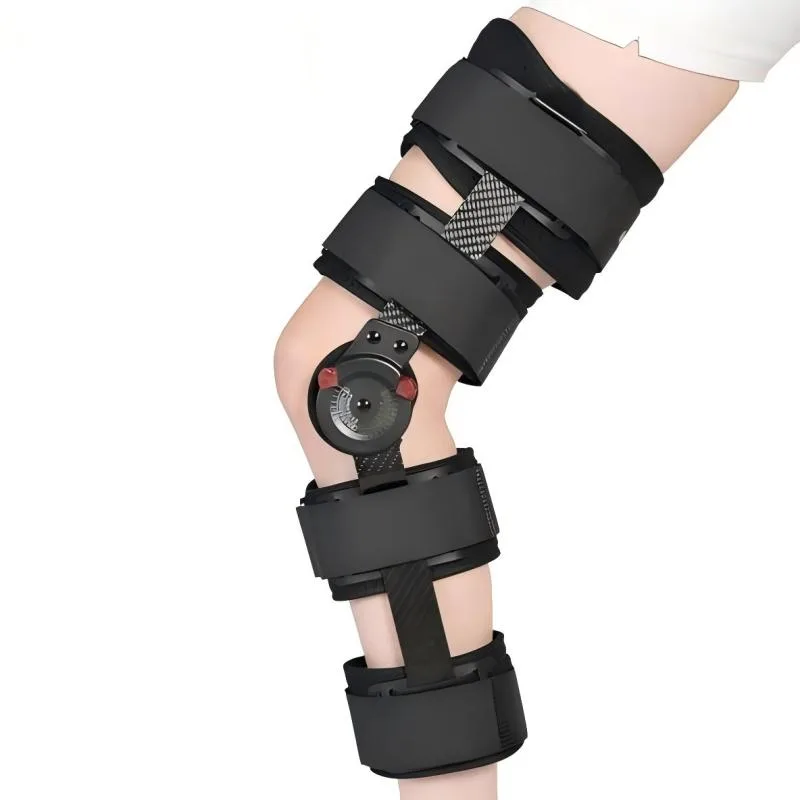
As global populations age and the demand for active senior lifestyles rises, the market for high-quality orthopedic rehabilitation supplies is expanding rapidly. For medical equipment distributors, elder care facility procurement managers, and specialized mobility brands, finding the right manufacturing partner for orthopedic sports supports is a critical business decision.
When sourcing orthopedic supports—such as knee braces, lumbar support belts, and ankle sleeves—for geriatric and rehabilitation markets, product evaluation moves far beyond basic aesthetics. The ultimate challenge lies in balancing two opposing manufacturing forces: medical-grade compression and long-term skin breathability.
Here is a comprehensive manufacturing guide on how to evaluate orthopedic sports supports and what to look for in a professional OEM/ODM supply chain.
1. The Anatomy of Compression: Meeting the Needs of Fragile Skin
For senior citizens and patients undergoing post-surgery rehabilitation, joint stability is paramount. Orthopedic supports must provide targeted compression to stimulate blood flow, reduce swelling, and stabilize vulnerable joints.
However, standard high-compression fabrics engineered for young athletes often fail in elder care. Senior skin is significantly thinner, less elastic, and highly susceptible to shear forces, friction injuries, and bruising.
What to Look for in Factory Engineering:
- Gradient Compression Technology: High-quality supports utilize specialized 3D knitting or variable-tension weaving. This ensures maximum compression is focused directly on the joint (e.g., around the patella), while tapering off at the cuffs to avoid restricting arterial blood flow.
- Anatomical Stabilizers: Raw fabrics alone cannot prevent joint misalignment. Premium manufacturers integrate medical-grade materials like flexible spiral steel stays or anatomically molded silicone gel pads to distribute structural pressure evenly without creating localized friction hotspots.
2. The Science of Breathability: Preventing Dermatological Complications
In long-term care facilities and home healthcare settings, patients often wear orthopedic supports for hours or even full days. If a support traps sweat and body heat, it quickly leads to skin maceration, bacterial growth, and contact dermatitis.
Material Evaluation Checklist:
When auditing a supplier’s material inventory, standard Neoprene (which completely traps heat) should generally be avoided for geriatric care unless heavily modified. Look for advanced alternatives:
- Airprene (Punched/Perforated Neoprene): Retains therapeutic joint heat while allowing moisture vapor to escape through precision micro-perforations.
- 3D Breathable Fly-Knitting: Utilizing advanced mechanical looms, this technique weaves varying yarn densities into a single piece of fabric, creating built-in ventilation zones across high-sweat areas like the back of the knee (popliteal fossa).
- Premium OK Cloth & Elastic Bands: The loops must withstand thousands of hook-and-loop fastening cycles without pilling or losing structural integrity, which ensures the tension remains consistent throughout months of use.
3. Manufacturing Standards & Factory Quality Control Checklist
A reliable B2B supplier must bridge the gap between textile manufacturing and medical-device precision. When evaluating a factory’s production line, ensure they pass the following quality thresholds:
| Quality Parameter | Standard Requirement | Impact on Elder Care Buying |
| Seam Construction | Flat-lock or seamless stitching | Eliminates pressure ridges that cause skin breakdowns. |
| Fastener Quality | Medical-grade, low-profile hook-and-loop | High shear strength but easy for arthritic hands to peel open. |
| Material Safety | Hypoallergenic, toxin-free, latex-free fabrics | Prevents allergic reactions on compromised skin barriers. |
| Biocompatibility | Certified skin-safe raw materials | Essential for seamless customs clearance and regulatory approval. |
Comdjoo: Your Trusted Partner in Home Healthcare & Orthopedic Supports
At Comdjoo, we understand that mobility and joint rehabilitation require a delicate balance of robust structural support and clinical comfort. As a dedicated supplier specializing in home healthcare, sports supports, and mobility solutions, we provide comprehensive OEM/ODM services tailored to the strict requirements of the global senior care market.
Explore our comprehensive engineering capabilities and view our full product portfolios directly at our Comdjoo Product Directory. From orthopedic joint braces to advanced positioning soft goods, our manufacturing facility offers:
- Flexible private-labeling and logo customization.
- Fully compliant, latex-free, and skin-safe material sourcing.
- Rigorous batch-testing for compression retention and industrial washing durability.
Ready to upgrade your product line?
Contact our B2B procurement team today for technical data sheets, factory audit reports, or to request custom-engineered samples.
📬 [Inquire Now & Request a Custom Sample]
Frequently Asked Questions (FAQ) for Global B2B Buyers
Q1: What international regulatory certifications are required to import orthopedic sports supports to the US and EU?
Answer: In the United States, most non-invasive orthopedic joint supports are classified as FDA Class I Medical Devices and require simple establishment registration and device listing. In the European Union, they fall under the MDR (Medical Device Regulation) Class I category, requiring a CE declaration of conformity, a registered UDI (Unique Device Identification), and compliance with REACH chemical safety standards.
Q2: How do you ensure the hook-and-loop fasteners on lumbar supports remain functional after commercial laundering?
Answer: Industrial-grade orthopedic supports utilize injection-molded plastic hooks (often called micro-hooks) paired with high-density OK cloth. Unlike standard apparel Velcro, these low-profile fasteners do not catch lint, maintain high horizontal shear resistance even after hundreds of wash cycles, and require less physical strength for senior citizens to open and adjust.
Q3: Does Comdjoo offer custom sizing and private label packaging for healthcare distributors?
Answer: Yes. Comdjoo is a fully integrated B2B supplier. We offer comprehensive OEM/ODM services, including custom sizing grids tailored to specific regional demographics, private label brand printing, custom color matching, and retail/institutional packaging configurations. For specific MOQs and technical capabilities, please visit comdjoo.com/product/.
